
The University of New Mexico’s Department of Music and the College of Fine Arts welcomes Dr. Solis to Keller Hall for his lecture on Thursday, February 18th at 2:00pm, “The Black Pacific: Music, Race, and Indigeneity in Australia and Papua New Guinea.”
From the Fisk Jubilee Singers’ tour of Australasia in the 1890s to Snoop Dogg’s visit to Brisbane in 2014, the last century has seen ongoing, intensive intersections between Indigenous and African Diasporic musicians and activists in the Southwestern Pacific. Dr. Gabriel Solis explores the musical history examining how it represents a continuation of older Indigenous cosmopolitanism and a newer structure, emerging alongside colonial processes.
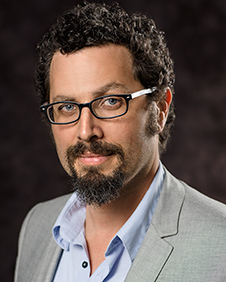 Dr. Gabriel Solis is Professor of Music, African American Studies, and Anthropology at the University of Illinois, Urbana-Champaign. A scholar of historical ethnomusicology, he has done research in the U.S, Australia, and Papua New Guinea. His work focuses on musical racialization as a component of global modernity. In addition to the books Monk’s Music: Thelonious Monk and Jazz History in the Making (2008), Thelonious Monk Quartet with John Coltrane (2014), and Musical Improvisation: Art, Education, and Society (2009, co-edited with Bruno Nettl), he is the author of articles and book chapters that have appeared in such journals as Ethnomusicology, Popular Music and Society, the Journal of the Royal Musical Association, the Musical Quarterly, Musicultures, and Critical Sociology.
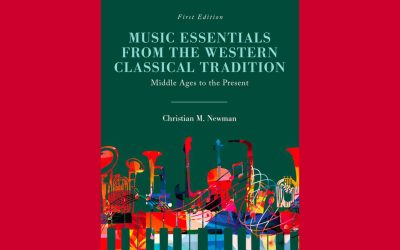
Christian M. Newman Published a New Music History and Music Appreciation eBook
Christian M. Newman, a lifelong New Mexican composer, historian, and college course designer, has published the eBook, Music Essentials from the Western Classical Tradition: Middle Ages to the Present (First Edition) with Cognella Academic Publications, ©2027. Newman developed and authored this work as a music lecturer with the University of New Mexico’s department of music, and department of theatre & dance between 2016 and 2026.

UNM strings faculty sign historic agreement with Chinese Conservatory
University of New Mexico string faculty members Carmelo de los Santos, professor of violin and Christoph Wagner, assistant professor of cello and head of strings, traveled to China recently to formalize a landmark international partnership between the UNM College of Fine Arts and the Zhejiang Conservatory of Music (ZJCM), one of China’s leading institutions for higher music education.

UNM’s Abe Franck String Quartet completes first residency at China’s Zhejiang Conservatory
A new exchange program has been solidified that opens doors for all College of Fine Arts students